

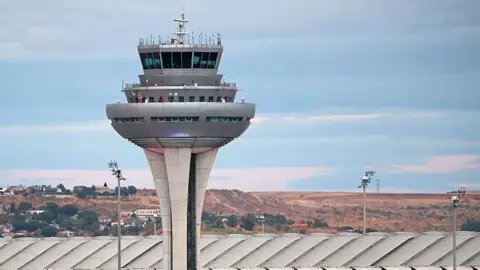
The Spanish government has closed its airspace to American military aircraft involved in operations against Iran, according to Spain's defence minister Margarita Robles.
Clear Message
"We refuse to permit the use of our military bases for any activities connected to the Iran hostilities," Minister Robles stated, explaining that Spain had "expressed this stance to the United States from the start."
Foreign Minister José Manuel Albares stated the goal of the action was to "not do anything that could fuel an intensification in this war."
US Response
The American administration did not immediately comment, but US President Trump has in the past stated to enact a comprehensive trade ban on Spain over its resistance to the conflict.
Firm Position
From the beginning of the conflict in February, the Prime Minister Pedro Sánchez has been a prominent voice against of the American and Israeli strikes, calling them "dangerous" and "against international law."
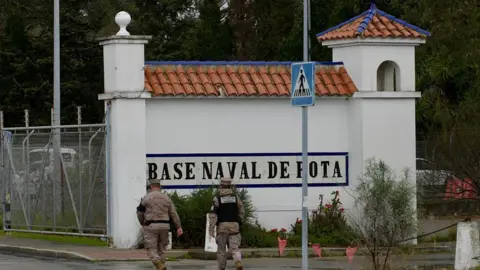
Last month, he confirmed Spain had refused the US use of the two jointly run military bases at Rota and Morón, located in Andalusia.
"Ours is an independent state that has no desire to take part in unlawful conflicts," the Prime Minister declared.
He also announced that "any proposed route that concerned operations related to the campaign in Iran were turned down - all of them, even for aerial tankers."
Logistical Consequences
US warplanes participating in missions in Iran are operating from the Fairford air base in England, after the UK agreed to a request from the US.
Bombers departing from there will be forced to bypass much of the Iberian peninsula - by routing across the eastern Atlantic or over France.
Reports indicate that aircraft would only be able to enter Spain's airspace or touch down at the bases in case of an urgent situation.
Historical Stance
In a televised address, the leader reflected on other conflicts and said the Spanish government's position could be encapsulated as "against war."
Later in March, the Iranian embassy in Spain indicated Tehran would be open to appeals from Madrid concerning transit through the Strait of Hormuz because Spain was "adherent to international law."
Market Effects
Nearly a significant portion of the global crude oil typically travels through the strategic strait between Iran and the peninsula of the Arabia.
In recent times, the risk of attacks by Iranian drones, missiles has forced its closure, triggering a spike in oil prices.


